Building a product studio and its product discipline
Co-founding an independent studio and giving it the rigour of a much larger one: two products in unrelated categories, one standard of quality, shipped after hours.
- Client
- IZANAGI CODE
- Year
- 2025-2026
- Role
- Co-founder & CPO
- Duration
- Ongoing
Context
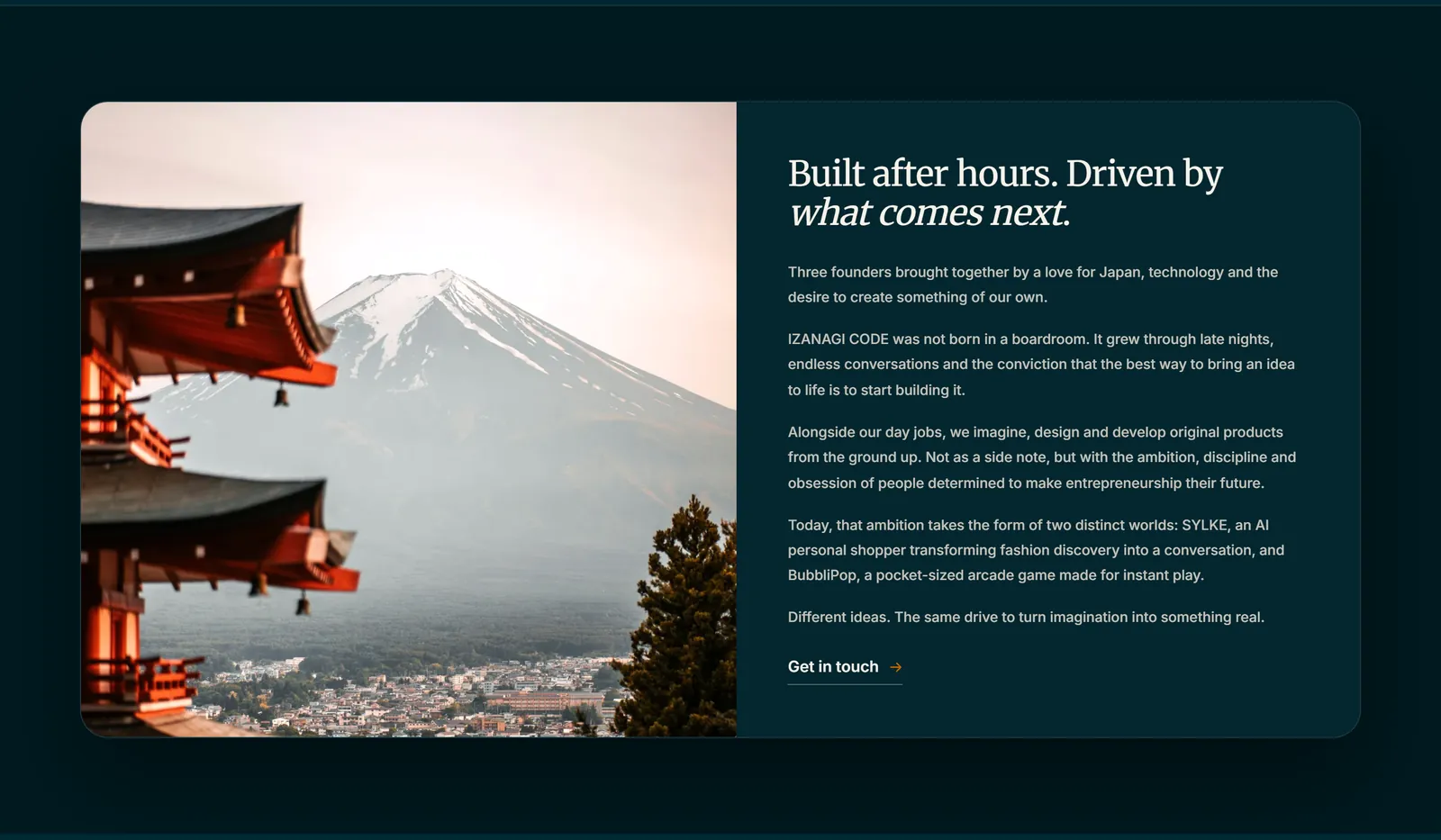
IZANAGI CODE is an independent product studio I co-founded with two partners, built around a shared interest in Japan, technology, and the will to make something of my own.
It was not born in a boardroom. It grew through late nights and the conviction that the best way to bring an idea to life is to start building it. Alongside a full-time job, I imagine, design, and ship original products from the ground up.
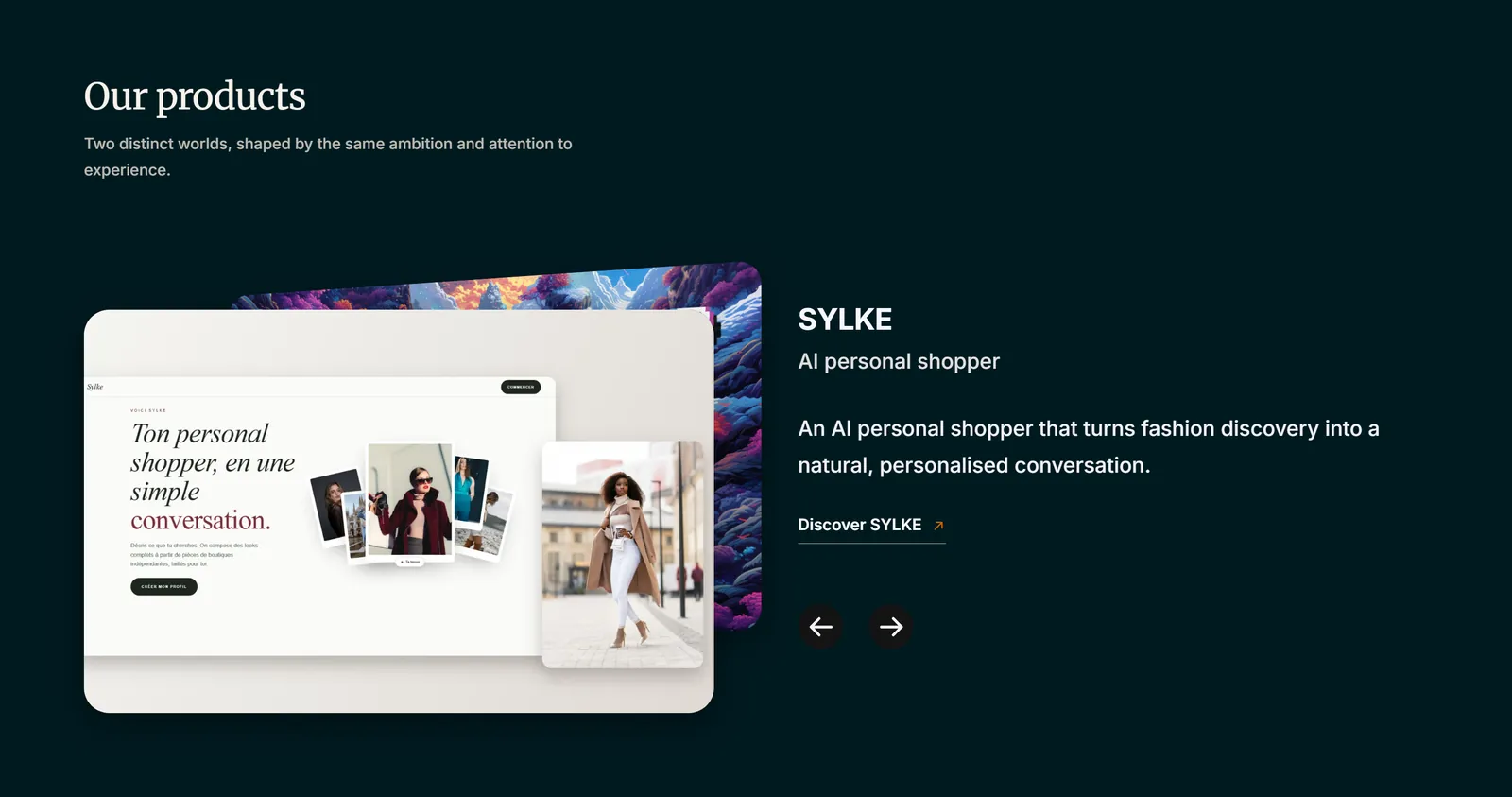
Today that takes the form of two distinct worlds: SYLKE, an AI personal shopper, and BubbliPop, a pocket-sized arcade game. As CPO, I hold product and design across both.
The problem
A studio shipping an AI shopping product and a mobile arcade game has no natural coherence to fall back on. The two categories share no audience, no interface conventions, and no success metric.
On top of that, the real constraint is time: everything is built outside full-time jobs, which means process has to replace hours.
Discovery
Methods
- Definition of what the studio is for, before deciding what it would build
- Scoping each product to what three people can ship without a full-time team
- Splitting founder responsibilities so no decision waits on consensus
- Establishing shared product foundations reusable across unrelated products
- Reviewing each release against a single quality bar rather than per-product standards
What I found
The coherence of a studio does not come from its products resembling each other. It comes from the standard applied to all of them. Once I stopped looking for a shared category and set a shared quality bar instead, scope decisions became straightforward and the two products stopped competing for the same attention.
Key insights
A studio is a standard, not a category
Two products can share nothing on the surface and still be recognisably from the same place. What travels between them is the level of finish and the discipline behind the decisions.
Constraints have to be designed for
Building outside full-time work is not a smaller version of building full time. Scope, process, and ownership all have to be set for the hours actually available.
Clear ownership beats consensus
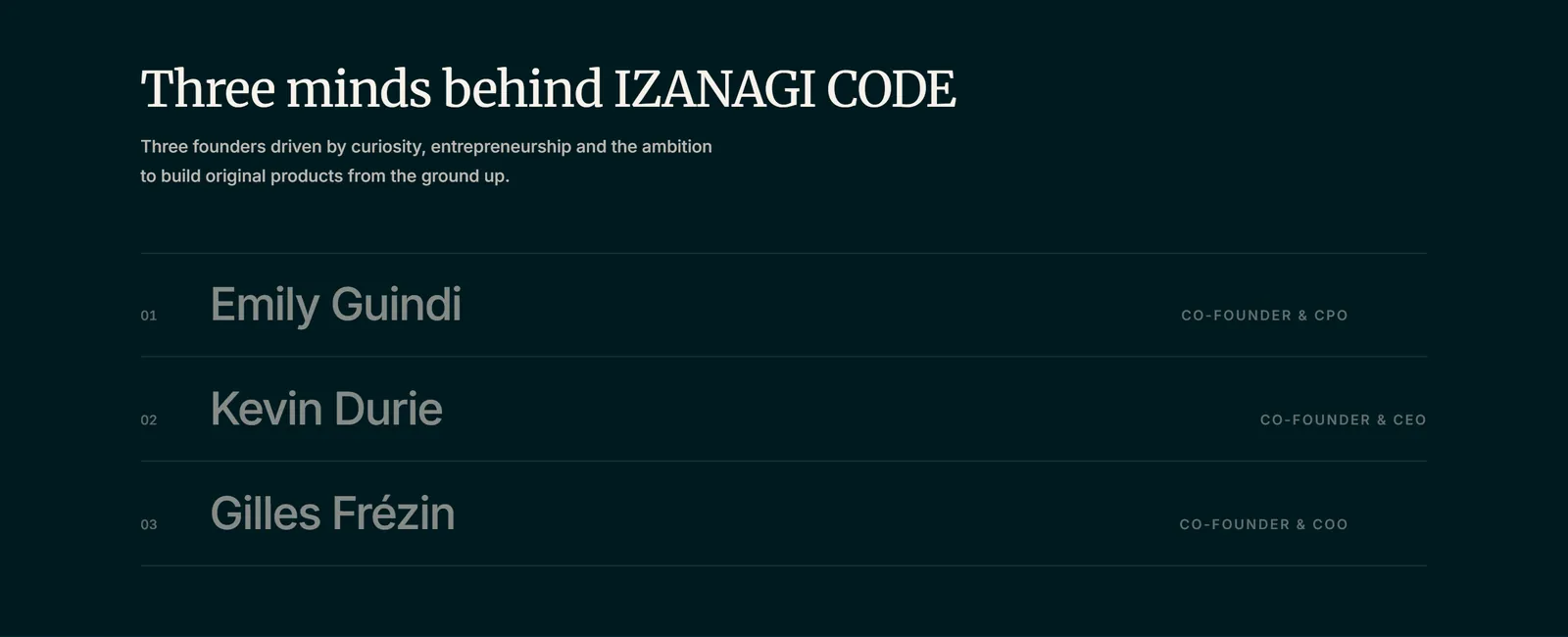
Three founders, three distinct roles. Product, business, and operations each have a decision-maker, which is what keeps a part-time studio moving at all.
Ship to learn what the idea is worth
An idea discussed indefinitely stays an idea. Both products taught me more in their first week in front of real users than in months of planning.
Strategy
Treat the studio as a product in its own right: a clear positioning, a defined founder structure, shared foundations, and one quality bar applied to everything that ships, whatever the category.
Product decisions
- 01Position the studio around original products from idea to launch, not around services
- 02Give each founder full ownership of one domain: product, business, operations
- 03Hold one quality bar across products instead of grading each category separately
- 04Reuse product and design foundations wherever the category allows it
- 05Ship early and publicly, then let real usage set the next priority
Execution
Set up the studio and its product practice end to end: positioning and brand, founder structure, the studio site, and product and design ownership across both products in the portfolio.
What shipped
- 01Studio positioning and brand: an independent studio building original products
- 02Product and design ownership across SYLKE and BubbliPop
- 03Studio site designed and shipped as the public face of the portfolio
- 04Shared product foundations reused across unrelated product categories
- 05BubbliPop taken to release on both mobile stores
- 06SYLKE taken from idea to a pre-launch product with a live waitlist
Impact
A working independent studio with two products in the portfolio: a game released on both mobile stores and an AI shopping product in pre-launch, held to one product standard and run alongside three full-time jobs.
Key takeaway
What makes a studio credible is not the range of what it builds. It is that everything it releases holds the same standard.