Turning Confidential DeFi into a usable product experience
Built from scratch and shaped by market research, user research, and product exploration to make a complex Web3 product clearer, more guided, and easier to use.
- Client
- iExec
- Year
- 2025-2026
- Role
- Lead Product Designer
- Duration
- 8 months
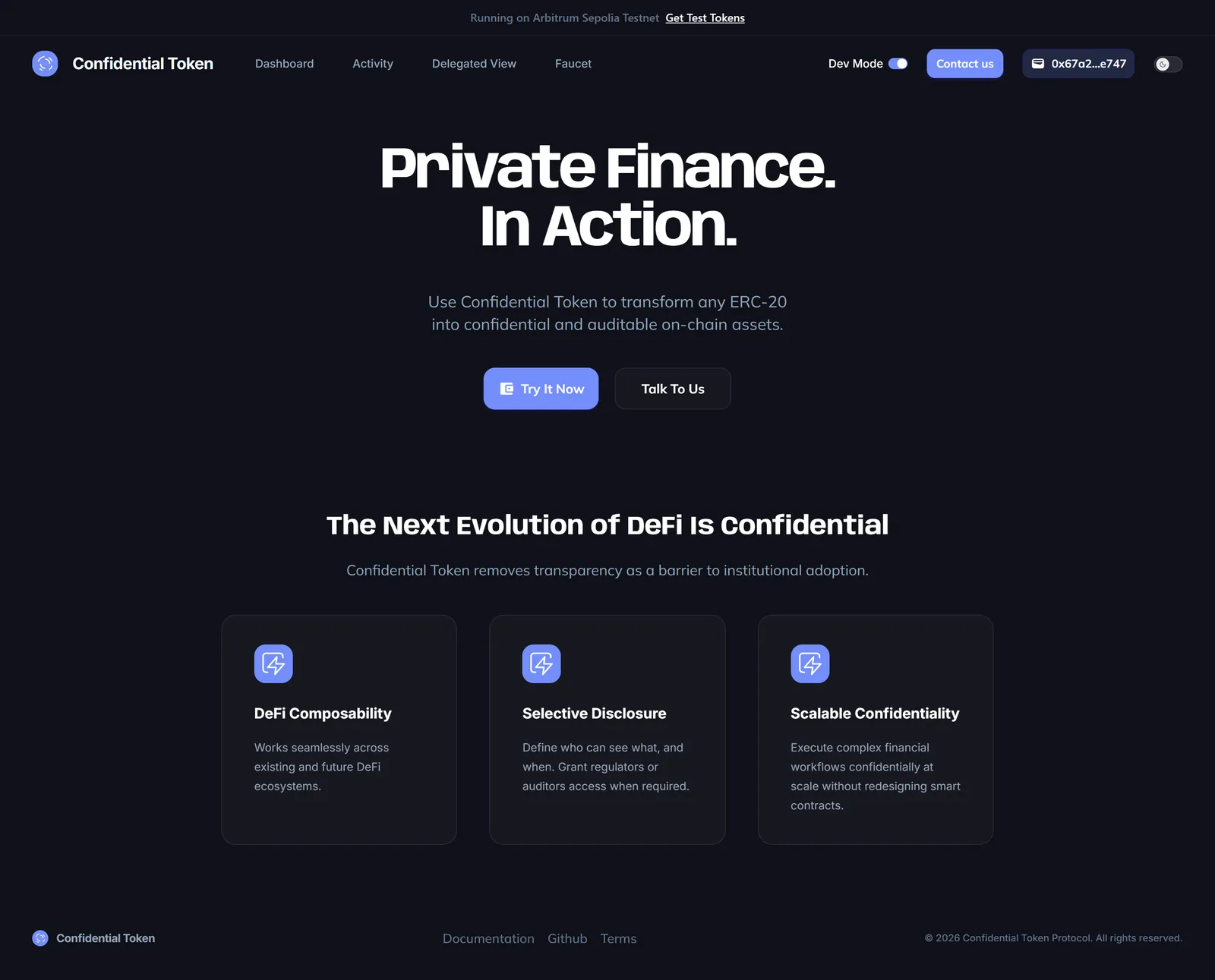
Context
Confidential Token is a demo built to showcase how Confidential DeFi and Confidential RWA can work in practice through iExec's privacy-preserving stack.
The challenge was not just to design a demo, but to make a highly technical product understandable and usable for people who needed to connect a wallet, get testnet assets, understand gas, networks, and tokens, wrap tokens into cTokens, transfer confidential assets, use selective disclosure, and verify what happened on-chain.
This required designing an experience that could both introduce a new product category and guide users through unfamiliar and complex flows.
The problem
Confidential DeFi introduces powerful capabilities but comes with significant onboarding and setup complexity. Users struggled with unclear prerequisites before starting, confusion between network, token, and gas requirements, friction around bridging and funding wallets, lack of guidance across the flow, and weak feedback during key actions.
The core issue: users were blocked before reaching the product's value.
Discovery
Methods
- Market research to identify product opportunities in Confidential DeFi and Confidential RWA
- Definition of product positioning and strategic direction
- User research and internal testing on early demo versions
- UX analysis of onboarding, setup, and core flows
- Identification of friction points across the full experience
What I found
Research and testing showed that the main barrier was not the value proposition: it was the path to access it. Users struggled before completing the first meaningful action. Setup and prerequisites created major friction. Confusion between gas, tokens, and networks was common. Users lacked confidence in what to do next, and value became clear only after significant effort.
Key insights
Onboarding is the product
Users form trust during setup, not after. How the product greets and guides users from the first interaction shapes their confidence for every step that follows.
Time to value is critical
Users must reach a meaningful action quickly to understand the product. Every extra step before that first successful action is an opportunity to lose them.
Guidance is essential
Without clear direction at every step, users hesitate or drop off. Guidance must be woven into the flow, not added as an afterthought.
Complexity must be staged
The product is inherently technical, but the experience must reveal complexity progressively, matching user readiness, not technical architecture.
Strategy
Defined a product direction focused on making the experience usable without removing its complexity: reduce time to value, clarify setup and prerequisites, guide users step by step, make first actions obvious, and improve feedback and confidence.
Product decisions
- 01Clarify prerequisites: make networks, gas, and token requirements explicit before users begin
- 02Restructure onboarding: transform fragmented setup into a guided, step-by-step flow
- 03Reduce cognitive load: break complex actions into smaller, clearly framed steps
- 04Guide first actions: help users understand what to do and why at every stage
- 05Improve feedback loops: make system status and outcomes clear after every key action
Execution
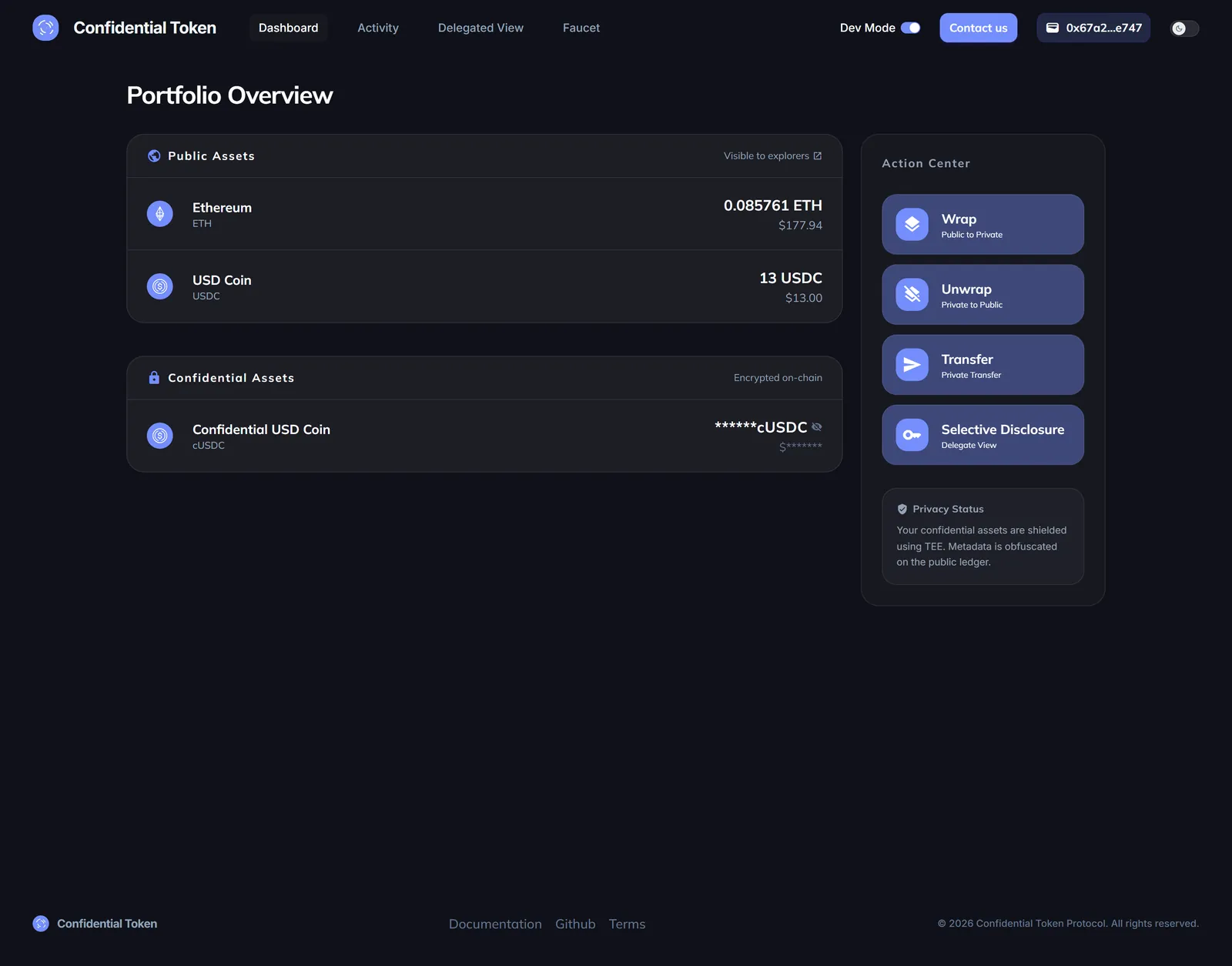
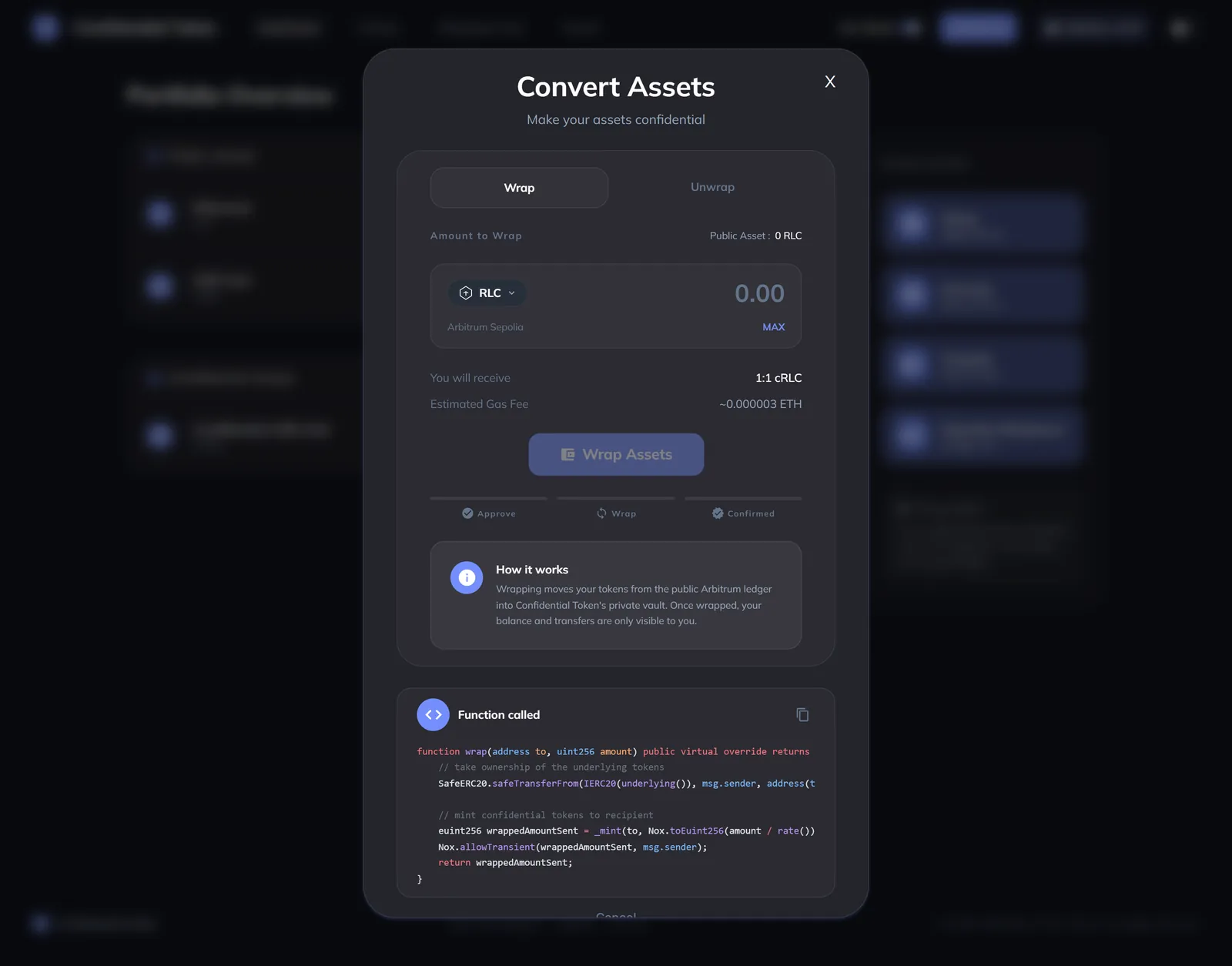
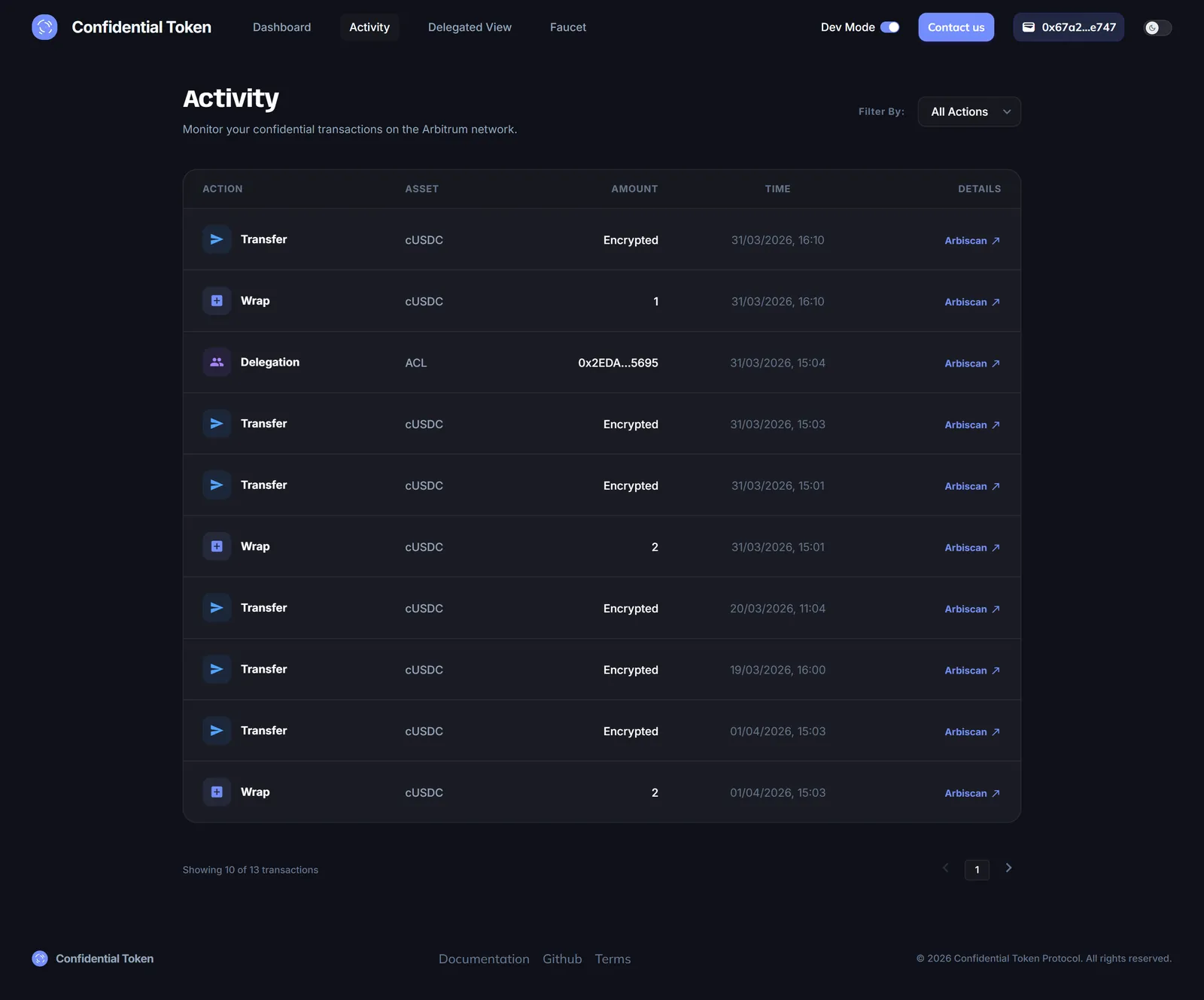
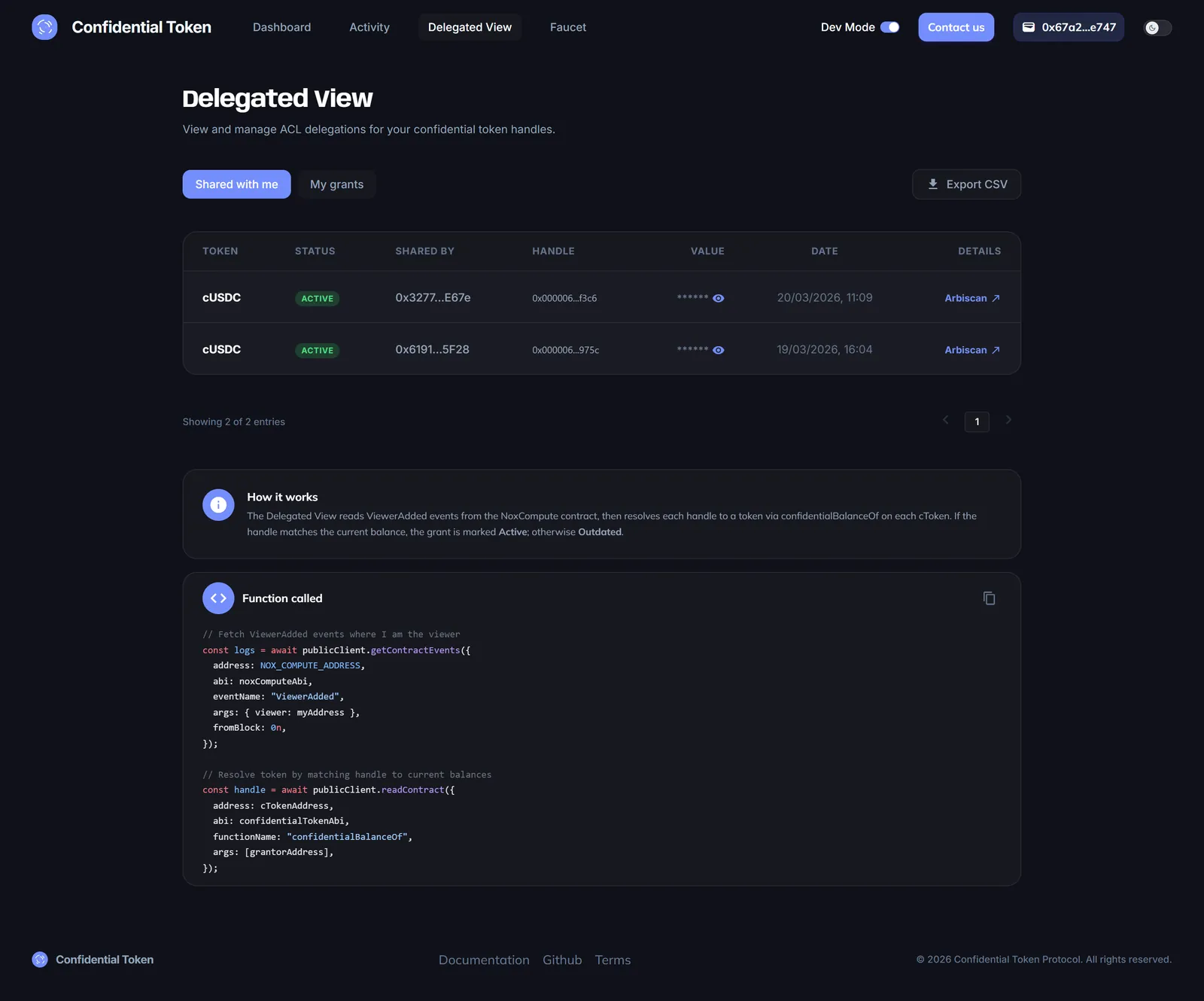
Designed the demo experience from scratch across information architecture, onboarding and setup flows, wallet and asset logic, interface and interaction design, guidance patterns, feedback states, and task flows: wrap, transfer, selective disclosure, and on-chain verification.
What shipped
- 01User journeys and flow definition across all core demo actions
- 02Wireframes and high-fidelity UI for the full demo experience
- 03Onboarding flow: from wallet connection to first confidential token transfer
- 04Usability testing and synthesis with iterative design improvements
- 05Prioritisation of improvements based on research findings and identified user blockers
Impact
The project defined product direction for Confidential DeFi and Confidential RWA, validated market opportunity and positioning, identified major onboarding and setup blockers, and established a research-driven foundation for future iterations, aligning UX decisions with both user needs and technical constraints.
Key takeaway
In complex Web3 products, usability comes from designing the path to understanding, action, and trust, not from removing complexity.