Designing an AI personal shopper people actually trust
Turning fashion discovery into a conversation, built from scratch around memory, taste, and one sentence instead of endless filters.
- Client
- IZANAGI CODE
- Year
- 2026
- Role
- Co-founder & CPO
- Duration
- In progress, launching early 2027
Context
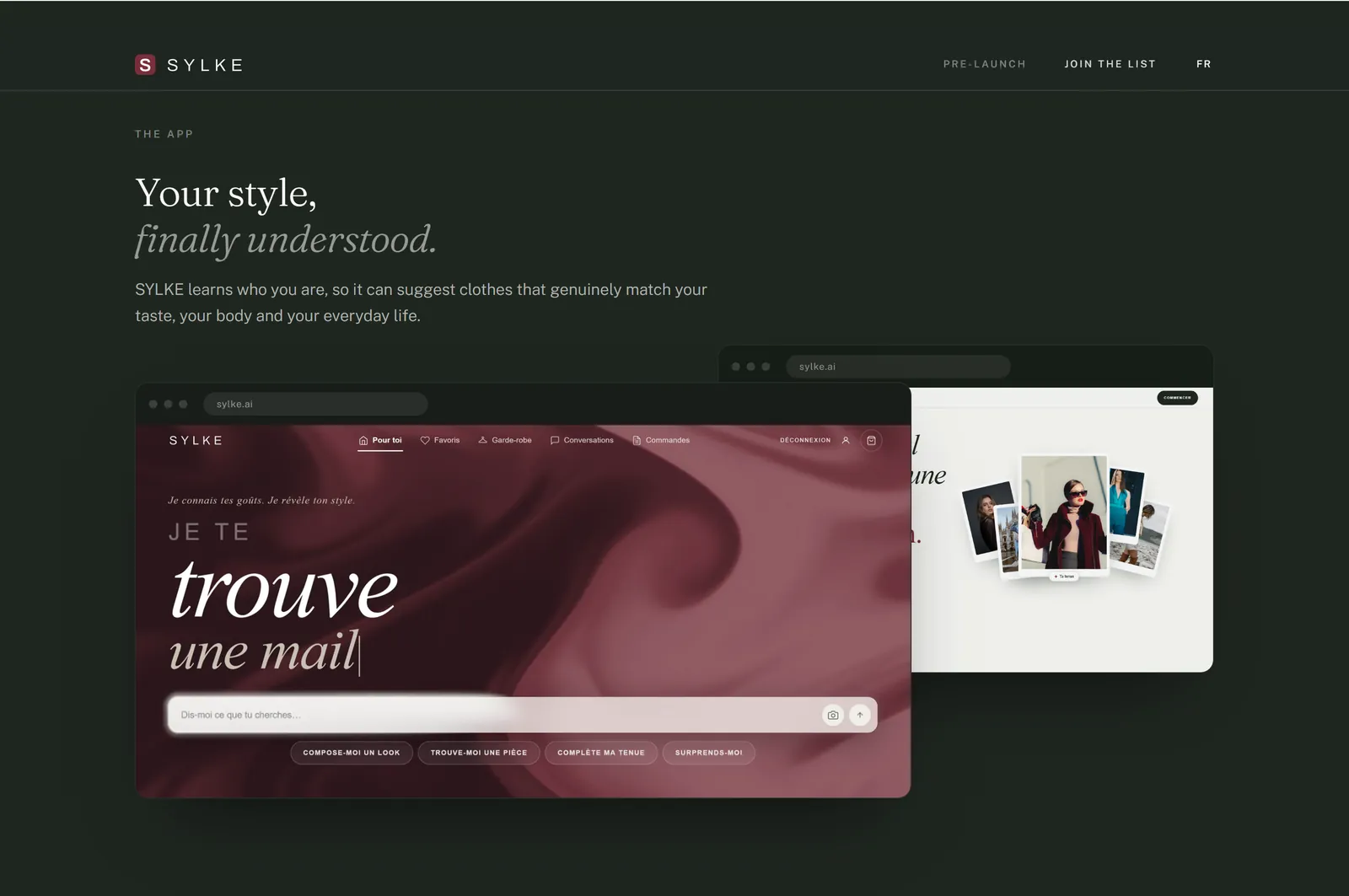
SYLKE is an AI personal shopper built at IZANAGI CODE, the independent product studio I co-founded. It turns fashion discovery into a conversation instead of a search.
The product serves two sides at once: shoppers who want to be understood, and brands that want to be found. As co-founder and CPO, I own the product vision, the conversational experience, and the design foundations behind it.
SYLKE is in pre-launch, with a waitlist open ahead of an early 2027 release.
The problem
Online fashion discovery is built for browsing, not for deciding. Shoppers meet generic results, endless filters, and infinite scroll, then start from zero on the next visit. Nothing the interface learns about them survives the session.
The harder problem: taste takes one sentence to express and is almost impossible to express in a filter panel.
Discovery
Methods
- Positioning work to define what an AI stylist must know before it can recommend anything
- Mapping the shopper journey from first intent to decision, and the points where it breaks
- Review of filter-driven and feed-driven discovery patterns across fashion retail
- Definition of the profile model: size, body shape, taste, budget, and everyday life
- Testing conversational flows against real requests rather than sample queries
What I found
Shoppers describe what they want in a single natural sentence, then spend minutes translating it into filters that cannot hold it. The gap is not search quality, it is that the product forgets. Every session restarting from zero means the interface never earns the right to make a confident recommendation, and a recommendation without context reads as a guess.
Key insights
Memory is the product
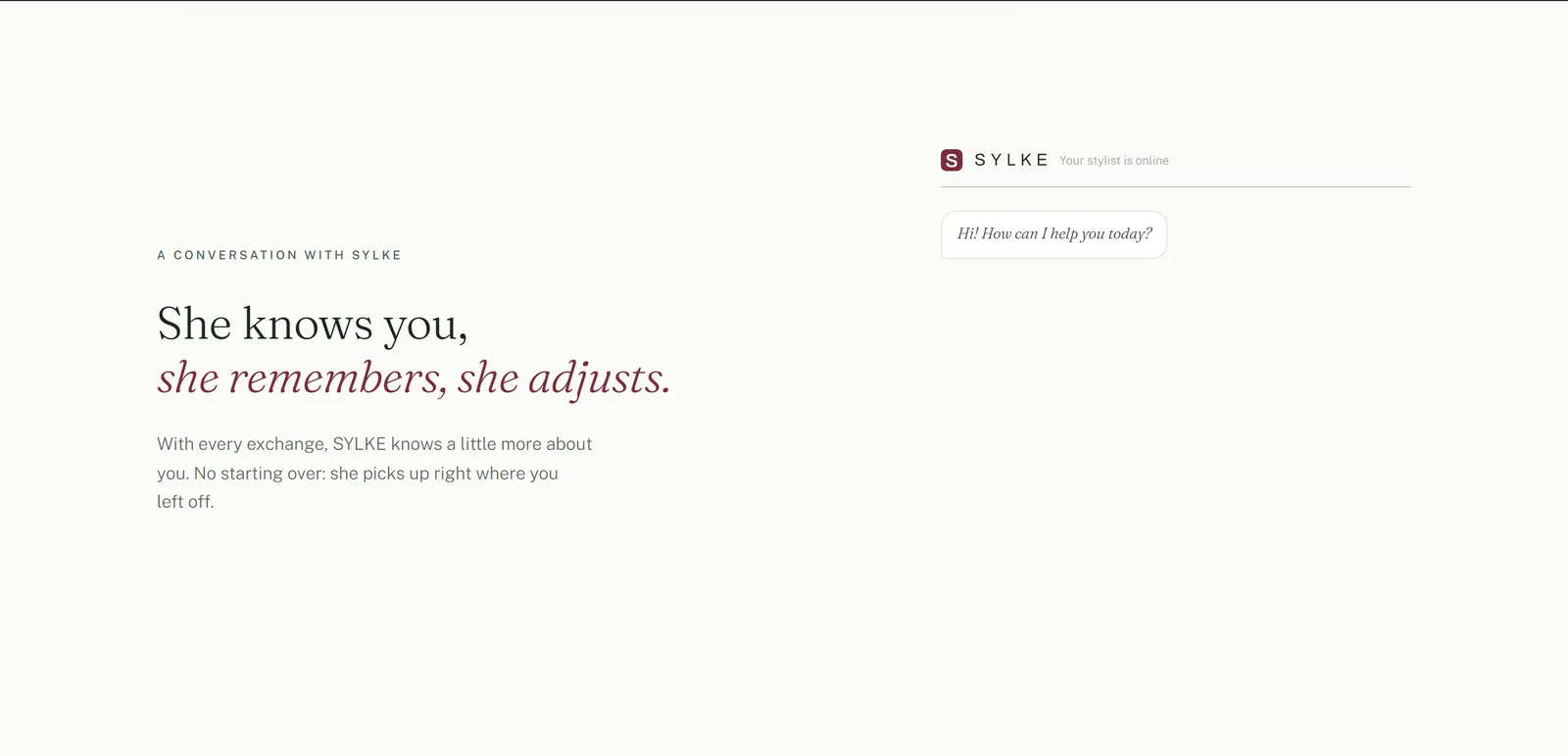
A stylist who asks the same questions every time is not a stylist. Persistence across sessions is not a convenience feature here, it is the reason the recommendation can be trusted at all.
One sentence beats twenty filters
People express intent in context: an occasion, a season, a budget. The product has to accept that sentence as the input, and carry the burden of interpretation itself.
Confidence comes from being known
Shoppers accept a shorter selection when they can tell it was built for them. Fewer, better-justified options beat a longer list they have to narrow down alone.
Two audiences, one system
Shoppers need to be understood, brands need to be discovered. Designing both sides against the same profile model keeps the product coherent instead of splitting it in two.
Strategy
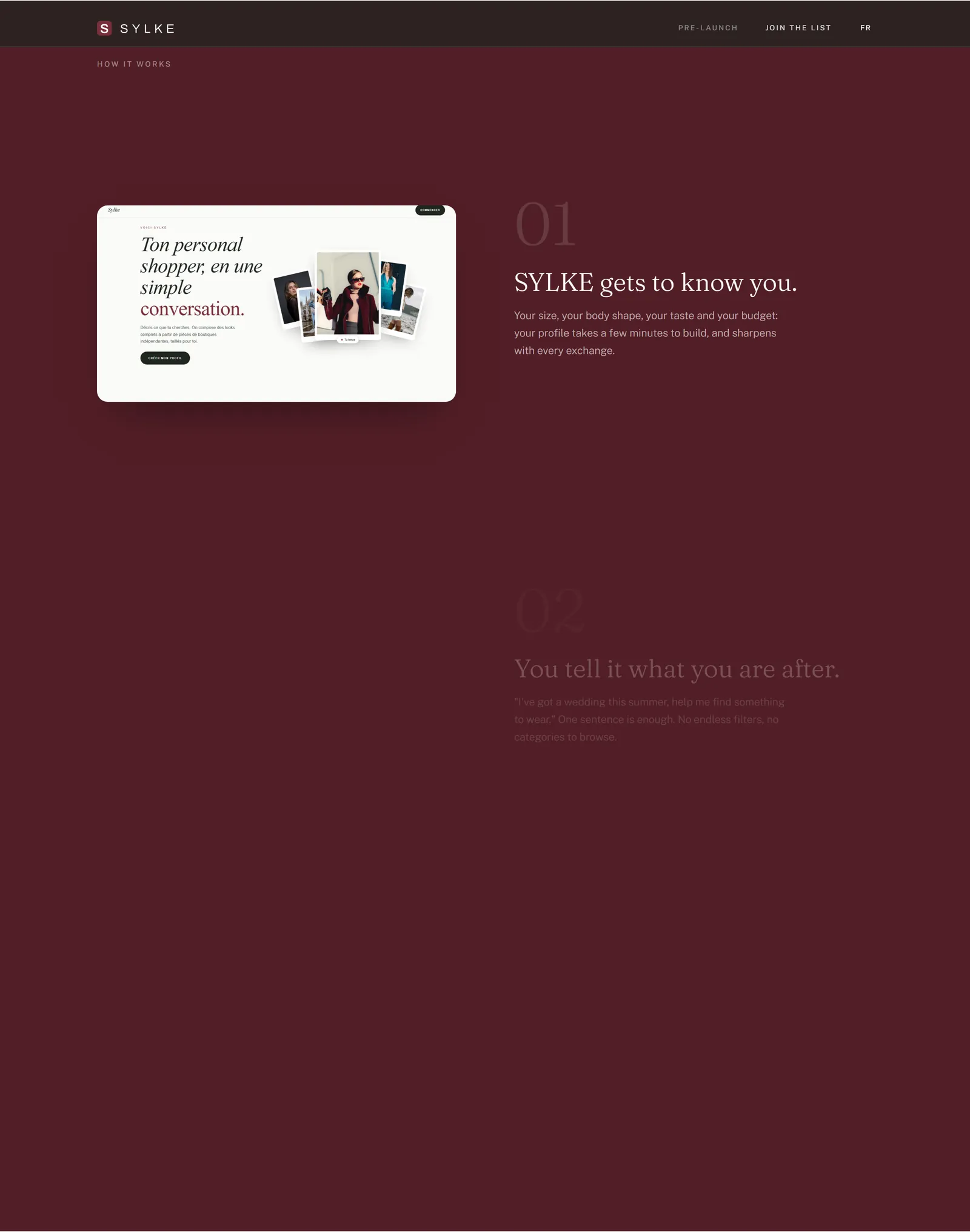
Make conversation the primary interface, make memory the reason to come back, and keep the selection short enough to act on. The product should move a shopper from stranger to styled in three steps, without ever asking them to browse.
Product decisions
- 01Build the profile first: size, body shape, taste, and budget, established in minutes and refined with every exchange
- 02Accept intent as a sentence: one request replaces filters and category navigation
- 03Never reset: each conversation resumes where the last one stopped
- 04Keep the selection short: a precise piece, a few options, or a full look, always inside the stated budget
- 05Design the brand side against the same profile model, so discovery works both ways
Execution
Defined and designed the product end to end: positioning, profile model, conversational flows, the three-step journey from onboarding to selection, and the brand and interface system carrying it across product and marketing.
What shipped
- 01Product vision and positioning for a conversational shopping experience
- 02Profile model and onboarding: a usable taste profile built in a few minutes
- 03Conversational flows designed against real shopper requests and follow-ups
- 04Selection patterns for a single piece, several options, or a complete look
- 05Brand and interface foundations shared by the product and the pre-launch site
- 06Pre-launch experience and waitlist ahead of the early 2027 release
Impact
SYLKE went from an idea to a defined, designed product in pre-launch, with its positioning, profile model, and conversational experience settled and a waitlist live ahead of the early 2027 launch.
Key takeaway
An assistant becomes trustworthy the moment it remembers. Interpretation, not filtering, is what makes taste addressable.