Scaling UX/UI & Design Ops for Confidential DeFi & Confidential RWA
Structuring product experience, design systems, and workflows to support a privacy-first Web3 platform.
- Client
- iExec
- Year
- 2023-2024
- Role
- Lead Product Designer
- Duration
- 18 months
Context
When I joined iExec as Lead Product Designer, the company was evolving from an infrastructure-first Web3 player to a product-driven platform focused on Confidential DeFi and Confidential RWA.
The ecosystem lacked consistency, clear user journeys, and scalable design foundations across products and marketing.
The problem
The design landscape was fragmented across products and marketing with no structured system or processes in place. Builder and developer journeys were unclear, and there was no UX strategy or continuous feedback mechanism to drive improvement.
Discovery
Methods
- Audit of existing products and marketing surfaces across the ecosystem
- Stakeholder interviews across product, engineering, and adoption teams
- User feedback collection through surveys and analytics
- Competitive analysis of leading Web3 and developer-focused products
What I found
The ecosystem was built around technical capability rather than user experience. Teams were working in silos, design decisions were made ad hoc, and there was no shared language between design, product, and engineering. Builder and developer journeys had multiple undefined friction points with no feedback loop to identify or address them.
Key insights
Structure enables speed
A clear design process and shared system allows teams to move faster and make better decisions, even in a complex, fast-moving product environment.
Design Ops is a product
Treating the design workflow, system, and collaboration model as a product, with clear ownership and iteration, is what makes it sustainable at scale.
Privacy needs clarity
Complex privacy-preserving technologies require especially clear user journeys, language, and onboarding. More technical power requires less interface complexity.
Cross-team alignment amplifies impact
Connecting product, engineering, and adoption teams around shared user journeys multiplies the impact of every design decision made.
Strategy
Structure UX across products and the ecosystem, align teams around shared user journeys, introduce scalable design systems and processes, simplify complex concepts into usable experiences, and implement continuous feedback loops.
Product decisions
- 01Define and document the builder and developer journey end-to-end
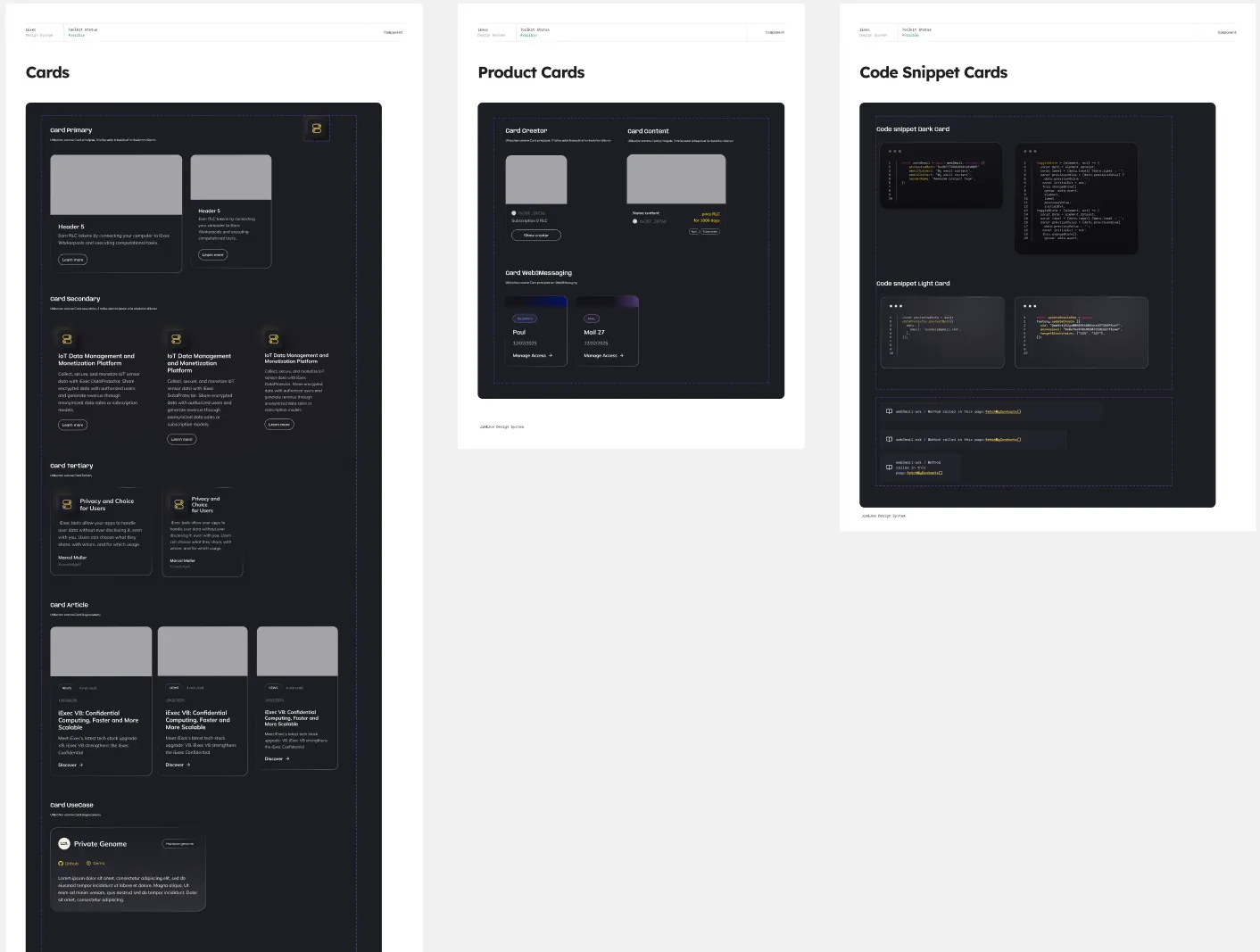
- 02Build a modular design system in Figma with tokens, components, and documented guidelines
- 03Introduce a structured design request and prioritization process across teams
- 04Implement recurring feedback loops across product, engineering, and adoption
- 05Redesign key product and website surfaces to improve clarity and consistency
Execution
Led design across product UX, Design Ops, the design system, and website UX/UI, working across multiple products and teams simultaneously over 18 months.
What shipped
- 01Redesigned builder journey: onboarding, dashboard, and core task flows
- 02Improved UX for Confidential DeFi and Confidential RWA demos
- 03Built a modular Figma design system with tokens, components, and usage documentation
- 04Structured the design request process, prioritization, and recurring team feedback loops
- 05Redesigned key website pages including Dev Hub and product-focused pages
Impact
Improved consistency across products and marketing, clearer builder and developer journeys, reduced ad hoc design work, faster delivery, and a design system adopted across teams.